company

 (866) 755-7519










The Real Cost of Location — How to Evaluate Cardiology Offers Across Markets
When you compare two cardiology offers from different markets, it’s easy to see which number is higher. But this bottom-line figure won’t tell you what’s on offer besides the salary.
The national cardiologist median salary is $496,010, but that figure varies by state, as does the cost of living. It’s also worth researching the cost of living, quality of life and other perks that might convince you to relocate.
1. Cost of Living
Comparing cardiologist salaries by state is one way to evaluate an offer, but a higher number does not necessarily guarantee you’ll have additional purchasing power. By consulting a cost-of-living index, you can calculate how far your cardiologist’s salary will stretch once you account for housing, utilities and other everyday expenses.
How a Cost-of-Living Index Works
A cost-of-living index compares expenses in one area to expenses in another, using 100 as the national average. An index above 100 means costs run higher than average, while an index below 100 means your dollar goes further.
Housing drives much of the variation between states, while the prices of groceries and everyday services tend to be more consistent, giving you a reliable idea of how far a salary will stretch in a given market.
Which States Offer Cardiologists the Most Purchasing Power?
Arkansas has the lowest cost of living in the country, with an index of 86.9, followed closely by Mississippi at 87 and Iowa at 87.8. In these states, each dollar earned goes roughly 13% further than it would on average.
On the other hand, California has an index of 110.7, Hawaii of 110, and New Jersey of 108.8, placing these states at the opposite end of the spectrum. In practice, a $600,000 salary in these states will give you roughly the same purchasing power as a $545,000 salary in a state with an index of 100.
2. State Taxes
State tax structure is another variable that dramatically differentiates one opportunity from another.
No-Income-Tax States vs. High-Tax States
Individual income tax rates vary from state to state. Some states charge graduated rates, while others charge a flat rate. These seven states have no income tax:
- Alaska
- Florida
- New Hampshire
- South Dakota
- Tennessee
- Texas
- Wyoming
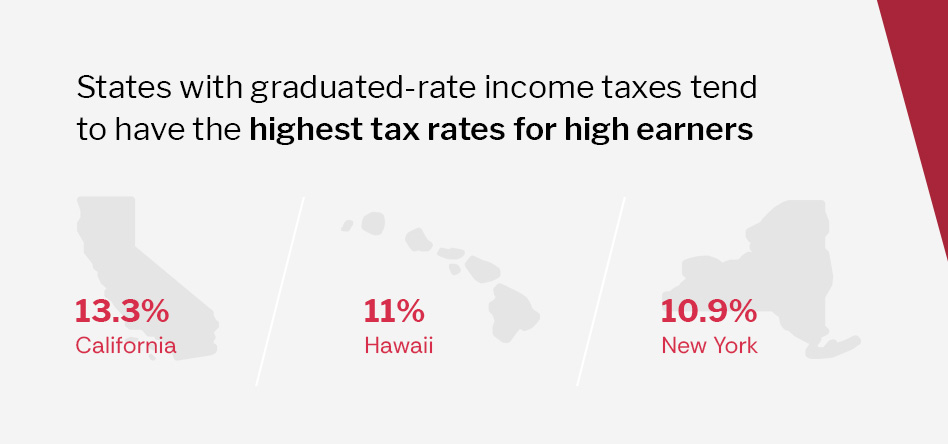
By contrast, states with graduated-rate income taxes tend to have the highest tax rates for high earners, with California at 13.3%, Hawaii at 11%, and New York at 10.9%. Due to these factors, a salary that initially seems low can give you more purchasing power.
For example, a cardiologist who earns $600,000 in California could pay roughly $79,800 in annual income tax, meaning a cardiologist in Texas could ultimately take home more even if their base salary is $530,000.
How Your Contract Structure Affects Your Take-Home Pay
Beyond state income tax, a contract’s structure also affects your tax exposure. W-2 employees and 1099 independent contractors are two common models, each with distinct tax implications.
If you are a W-2 employee, you’ll have taxes withheld directly from your wages, and your employer will manage tax reporting on your behalf. Combined tax rates of 30% to 40% are not unusual for high earners under this structure, though this will vary by location.
Independent contractors pay estimated taxes without wage withholding, but they can deduct business expenses and access retirement contribution strategies unavailable to W-2 employees. This flexibility can change the total value of an offer, especially for cardiologists who plan to maximize retirement contributions during their peak earning years.
3. Loan Repayment and HPSA Bonuses
Many cardiologists overlook a set of financial incentives often tied to underserved and regional markets. Two programs apply most often — the Medicare Health Professional Shortage Area bonus and, in some states, loan repayment assistance. The Centers for Medicare & Medicaid Services pays an automatic 10% quarterly bonus on professional services furnished in designated primary medical care HPSA areas.
Some states also offer loan repayment programs, such as Missouri’s Health Professional Loan Repayment Program, which can offset the cost of medical education for physicians who commit to practicing in a qualifying area. Cardiologists who combine these programs with other local cost-of-living and tax advantages can shift the total financial picture for a regional or underserved market position in their favor.
4. Quality of Life
Financial variables can influence your decision, but they shouldn’t be the only factors you weigh in your decision. Call burden, community, and long-term career sustainability will also affect your long-term satisfaction. Smaller cardiology departments in underserved markets may experience more frequent calls, but structured block scheduling models can reduce this downside by distributing coverage more evenly.
These markets also offer smaller teams, closer patient relationships, and leadership opportunities that are not typically available at large academic centers. For cardiologists evaluating where to practice, regional versus urban lifestyle considerations often carry as much weight as the numbers on an offer letter. Some of the best states for cardiologist lifestyle are the same ones offering the most promising financial upside.
How Regional and Underserved Markets Stack Up
Coastal metro areas often appear to offer the best deal on paper. However, regional and underserved markets regularly outperform their coastal counterparts once you factor in the cost of living, state taxes, loan repayment potential, and quality of life. Lower tax burdens and cost of living stretch every dollar further, while loan repayment programs and HPSA bonuses add value that a coastal offer rarely matches.
Cardiologists who work in rural markets often enjoy improved earning power and a better quality of life. Whichever offer you choose and regardless of whether the opportunity is in a coastal metro or a regional market, weigh every variable before accepting it.
Connect With VitalSolution to Explore High-Value Cardiology Opportunities
Understanding the real-world financial value of a regional or underserved market opportunity is only half the equation. Finding a good-paying position with an employer who values your expertise is the other half.
VitalSolution is a physician-led organization that specifically curates career opportunities in high-value regional and underserved markets, connecting cardiologists with hospitals that need their talents most.
The VitalSolution model for cardiologists is built around structured contracts and block scheduling, giving you predictable time away from the hospital without sacrificing stability. Travel and housing are often part of the arrangement, adding a layer of support many cardiologists value. Connect with us today to learn how we can elevate your career.